

Courtrooms have a strange kind of silence. Even when someone is speaking, there is still pressure in the air. People sit straight, breathe carefully, and avoid eye contact. That day felt heavy from the beginning. Nothing dramatic had happened yet, but the mood was already tense.
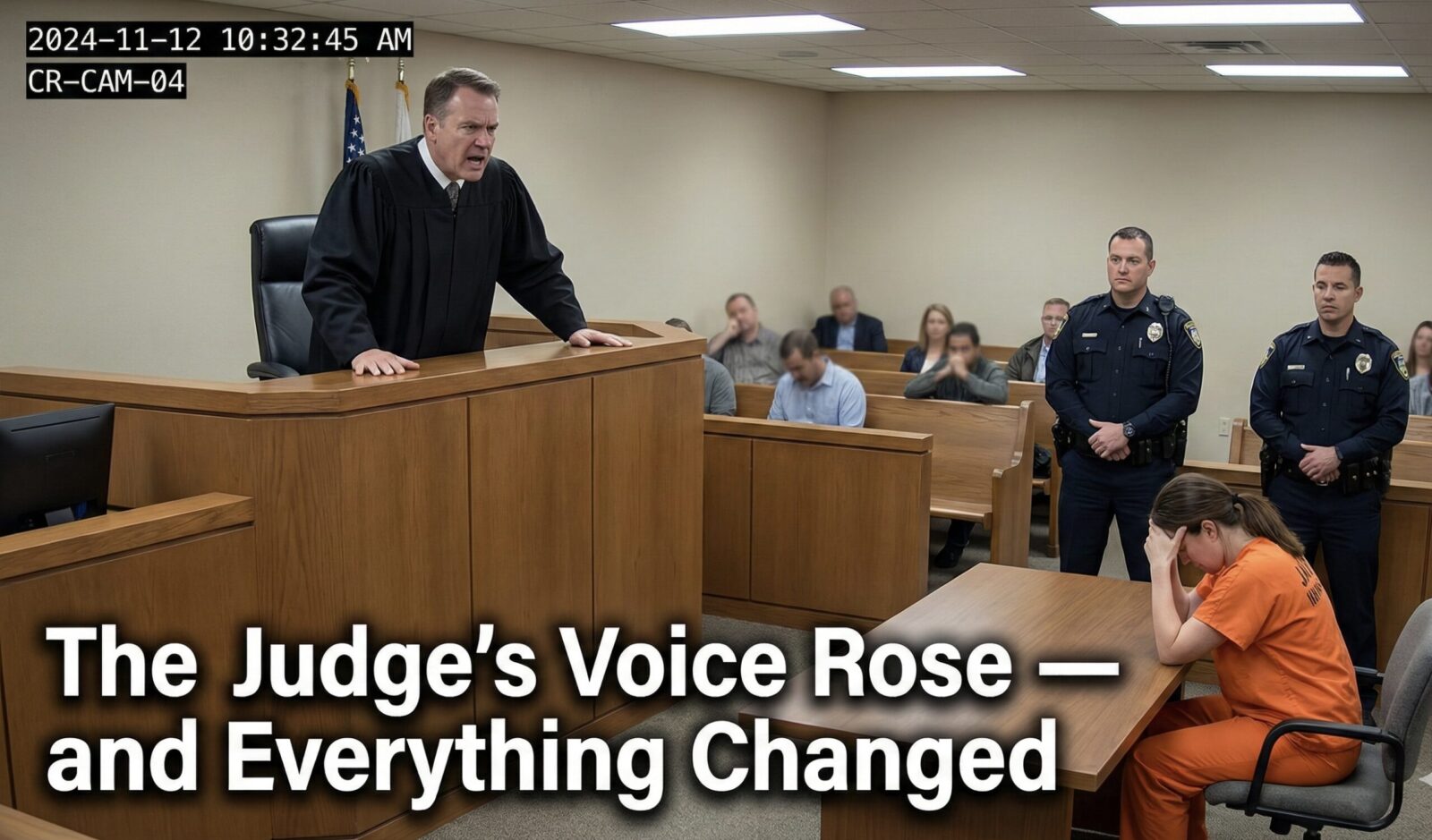
The judge sat at the bench, looking forward. His posture was firm, his face serious. He wasn’t shouting at first. He was speaking in a controlled way, choosing his words carefully. His voice was steady but strict, the kind that makes you understand he is not joking. He talked about responsibility. About actions and consequences. About how certain behavior cannot be ignored.
On the right side of the courtroom stood the woman.
She wore an orange jail jumpsuit. It looked loose on her, like it didn’t belong to her life before this place. Her hands shook slightly. She kept them close to her body, unsure what to do with them. She didn’t speak. She didn’t look up. Her eyes stayed low, fixed somewhere near the floor.
As the judge continued, his tone slowly changed.
His voice became louder. Not sudden, not wild. Just louder. You could hear the frustration building. His face tightened. He leaned forward a little, resting more weight on the bench. He was still seated, still in control, but his patience was wearing thin.
The woman noticed.
Her breathing changed. It became faster. Her shoulders tensed. She swallowed hard, trying to hold herself together. Her eyes started to shine, like tears were waiting just behind them. She blinked again and again, hoping they would not fall.
The courtroom stayed quiet.
No one interrupted.
No one moved.
Police stood still behind her.
The public watched without a sound.
Then the moment shifted.
The judge stood up.
Not quickly. Not in rage. He stood up smoothly, with purpose. His voice rose sharply now, louder than before. It filled the room. This wasn’t just warning anymore. This was disappointment. Anger, yes, but controlled anger. The kind that comes from seeing the same mistakes repeated again and again.
His words were strong. Clear. Each sentence landed heavy. He spoke about recklessness. About consequences that cannot be escaped. He didn’t shout randomly. He shouted with meaning.
The woman broke.
As soon as he stood and raised his voice, her control collapsed. Tears spilled out. She brought her hand up to her face, covering part of it, like she didn’t want anyone to see her like this. Her shoulders shook as she cried. It wasn’t loud crying. It wasn’t dramatic. It was raw. The kind of crying that happens when fear finally takes over.
She didn’t say a word.
Only sobbing sounds filled the space where silence had been. She bent slightly forward, head lowered. Her body looked smaller now. Less defiant. Less strong.
The judge stayed standing.
He continued speaking, but his tone changed again. Still loud, still firm, but more controlled. He laid out instructions. Clear consequences. No insults. No unnecessary words. Just facts and authority. His breathing was heavy, visible even from a distance.
The police remained alert but still.
They didn’t touch her.
They didn’t move closer.
They just watched, ready if needed.
The public sat frozen.
Some people stared. Some looked away. No one whispered. No one reacted loudly. It felt wrong to make noise in that moment.
When the judge finished speaking, he stayed standing. His eyes were fixed forward. The room felt smaller than before, like the walls had moved in just a little.
The woman continued crying softly.
Her head stayed down. Her hands trembled. She wiped her face once, but the tears didn’t stop. Whatever she had been holding inside was gone now. Only fear and regret remained.
Nothing else happened.
No sudden decision.
No dramatic ending.
No movement.
Just silence again.
The kind of silence that feels heavier after shouting than before it.
Later, people would talk about this moment. Some would say the judge was too harsh. Some would say he did what was necessary. Others would feel sympathy for the woman. Everyone would have an opinion.
But inside that courtroom, opinions didn’t matter.
What mattered was the moment itself.
A judge who started calm, grew angry, and ended firm.
A woman who stood silent, then cried when fear took over.
A room full of people reminded that actions have weight.
It didn’t look like a movie scene. There was no background music. No dramatic camera angles. Just real people in a real space, dealing with something uncomfortable.
And that’s why it stayed with those who saw it.
Not because it was loud.
But because it was real.