
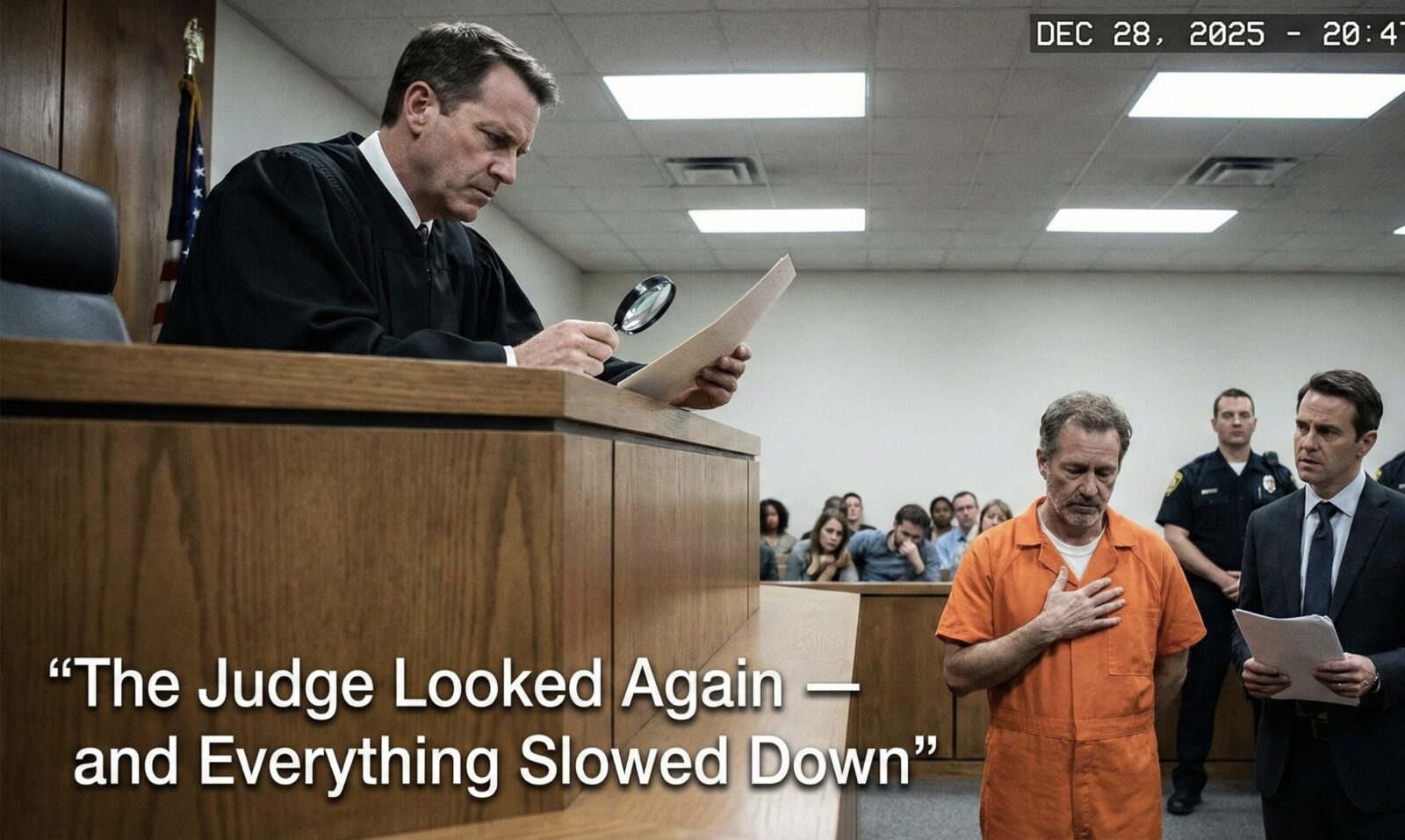

The Weight Inside the Courtroom
By mid-afternoon, the courtroom felt heavy. Every breath carried pressure, as though the air itself resisted movement. Meanwhile, hearings dragged on, stretching minutes into something longer. Lawyers adjusted their collars, chairs creaked under shifting weight, and officers changed stance slowly. Eventually, murmurs rose, only to fade again. When the judge prepared to call the next case, silence returned—thick and expectant.
At that moment, everyone sensed something was coming.
A Man Who Blended Into the Crowd
At first glance, nothing about the accused demanded attention. He appeared to be in his forties, of average build, dressed in a standard prison uniform. His hands stayed together, and his eyes remained fixed ahead. Fear never surfaced. Confidence didn’t either. Instead, he seemed hollow, as if the outcome no longer carried meaning.
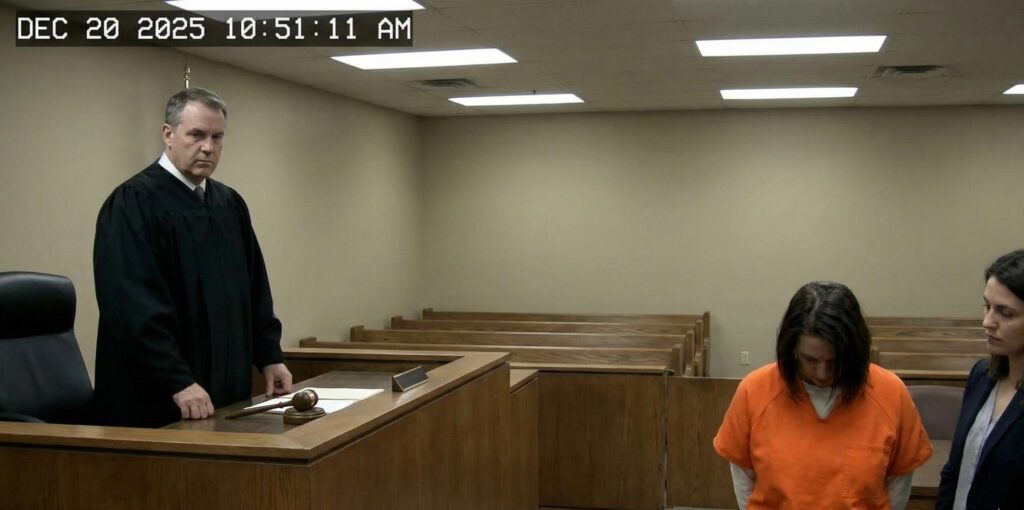
Quietly, officers guided him inside. As a result, the room barely reacted.
A Thin File, A Long Delay
Almost immediately, the folder caught the eye. It was thin—too thin. Usually, slim files suggest rushed preparation rather than careful work. Fewer pages often point to shortcuts.
Still, eight months had passed.
In contrast, the paperwork barely justified that length of time.
The Lawyer Takes Control
Without hesitation, the lawyer began speaking. Charges were presented as routine facts, stripped of emotion. According to him, the evidence was solid and unquestionable. Therefore, he pushed for quick decisions, speaking as though the conclusion had already been reached.
Throughout this, the judge remained silent, choosing to listen first.
A Question That Shifted Everything
Once the lawyer stopped, the judge leaned forward. Then came a simple question, delivered without confusion:
“How long has the accused been in custody?”
After a brief pause, the answer arrived—eight months.
At that point, the judge’s eyebrows lifted slightly.
Something Doesn’t Add Up
Given the thin file, eight months seemed excessive. Because of that, the judge slowed his review. One page held his attention longer than the rest. Afterward, another document raised concern.
Soon after, he asked about the medical report.
It wasn’t there.
Confidence Slips
For a moment, the lawyer hesitated. Eventually, he claimed the missing report didn’t matter. According to him, no complaints had been raised.
However, the judge noticed a subtle shift in posture. Though small, it didn’t go unnoticed.
The Accused Speaks
When questioned directly, the accused answered calmly. No one had come to examine him. No medical evaluation had ever happened.
Notably, there was no anger in his voice.
Only truth.
The Search for the Report
Following the exchange, court staff searched through files. Papers shifted hands as minutes passed. Still, nothing appeared at first. Meanwhile, the crowd leaned closer, sensing something was wrong.
Eventually, the intake report reached the bench.
What the Paper Revealed
As the judge read, silence settled over the room. The report mentioned chest pain during arrest. More troubling, no doctor had examined the accused afterward.
In fact, medical staff never came at all.
A Human Moment
Because of this, the judge turned to the accused and asked about his health. The man nodded slightly before speaking. He had heart problems. He had asked for help. Yet, no one responded.
His tone wasn’t angry.
Instead, it was exhausted.
Justice Beyond Punishment
Leaning back, the judge took his time before speaking. He explained that rights belong to everyone, including the accused. Therefore, holding someone for months without medical care crossed a line.
Intentions, he said, do not erase consequences.
Fairness must exist in action, not just words.
A Decision Without Delay
As a result, the ruling came quickly. The accused was ordered to be taken immediately for medical evaluation under escort. Until then, proceedings were paused.
Nothing else would move forward.
After the Order
The courtroom froze. The lawyer stood silent, clearly caught off guard. Meanwhile, officers exchanged quick glances before nodding in agreement.
As he was led away, the accused closed his eyes. No words followed. Still, a small nod suggested something had shifted—perhaps relief, perhaps acknowledgment.
What Remained
Later, the courtroom emptied slowly. No final verdict had been delivered. Questions lingered. Some faces showed discomfort, others quiet embarrassment.
Yet one thing stayed clear.
For a brief moment, the accused was no longer a case number. Instead, he was human again.
Sometimes, that recognition matters more than any judgment.