

Truth emerged in the courtroom
The Room Where Reality Hits
Faint light buzzed overhead, spilling across weathered wood seats beneath Judge Patterson’s bench. A quiet town’s court – unnoticed by most drivers passing on their way elsewhere. Cameras absent. The usual calm untouched by spectacle. Another ordinary Tuesday, yet one that quietly reshaped destinies.
Folks familiar with courtrooms sensed something shift – this day carried a weight unlike any before.
The Judge Who Knew Every Story
Into the room I went, Judge Patterson already sitting there. Straight as a ruler he sat, spine rigid, like someone who’d spent years telling others what to do. Not unfriendly, simply worn – like bark on an ancient tree, scarred by wind after wind. Storms had passed him before, yet here he remained.
Silence shaped his expression more than speech ever could. Not just fatigue showed there – more like the echo of choices piled one after another, each heavier than the last. Empty vows lingered beneath his gaze, stacking up over time like unread letters. What slipped from his lips on that wooden seat stuck around forever, altering paths whether meant to or not. The load sat snug on him, awkward yet tailored, much like an old coat that never really fits right – but stays anyway.
The Woman in Orange
Facing the judge, Jennifer Martinez waited. She was twenty-eight, perhaps a year or two less. On her body, the orange jumpsuit sagged, creased from time spent sitting on cold benches. Not much moved – just her fingers twitching near her hips, quiet proof of everything pressing beneath.
Downward stayed her gaze. Upwards never lifted. Along grout lines her sight crept, stepping through shapes like steps toward nowhere. Each small square held a breath – hers – the kind that sinks instead of rises.
When the Words Began
Silence broke when Judge Patterson began to speak – calm, yet steady. Not aimed at Jennifer right then. More like setting down pieces of a puzzle everyone would soon see. His words weren’t sharp, just clear, forming something solid beneath the moment.
Sometimes he spoke of duty. Choices led to outcomes, one after another. Regret might be real, yet it cannot fix what’s damaged. Feelings fade, but broken things remain – no amount of sorrow changes that.
The air in the room grew still. Everyone waited without moving.
Breath quickened, Jennifer stayed silent. Up and down went her chest, each inhale sharper than the last. A tight gulp. Another followed just behind. Something rising, she held it down.
Yet a change came through how the judge spoke.
The Moment Everything Changed
From nowhere, a small shift took hold. Cracks appeared in the courtroom tone, letting out a voice that sounded like someone tired. Not furious. Not mocking. More like let down. A heavy kind of letdown, worn thin over time.
Softening his voice, he edged a bit closer, leaving strict legal terms behind to talk straight – those harmed by it all. Trust was broken along the way. Chances simply wasted, gone without reason.
Falling apart started there, inside that moment, for Jennifer.
The Breaking Point
Water filled her eyes. Blinking fast did nothing to hold it back. The edges of her lips pulled inward. Out came a quiet breath she didn’t mean to release. Folding slightly, she curled as though less space might change the moment.
Silence held the room. Not even the lawyer lifted his eyes, knowing better than to break such quiet. Bailiffs became statues. A relative – or perhaps someone with a notebook – waited without moving, breath tucked away.
Forth came Judge Patterson, rising from the seat.
When A Judge Stands
Up got he, slow, intentional. Not sudden – no drama there – just quiet movement like before. Yet once upright, the air shifted. Presence alters when judges stand instead of sit. Eyes turn. Moments tighten. Authority adjusts its posture without speaking.
Filling the courtroom, his words bounced against the aged walls.
“You made choices,” he said quietly but firmly. “Those choices had consequences. Real consequences for real people. This court has a duty that extends beyond sympathy. Even when we feel compassion, justice must be served.”
A silence crept in after he spoke, slow and thick. The air felt tighter, somehow, as if pressed down by what was just said.
Jennifer gave way beneath its weight.
The Complete Unraveling
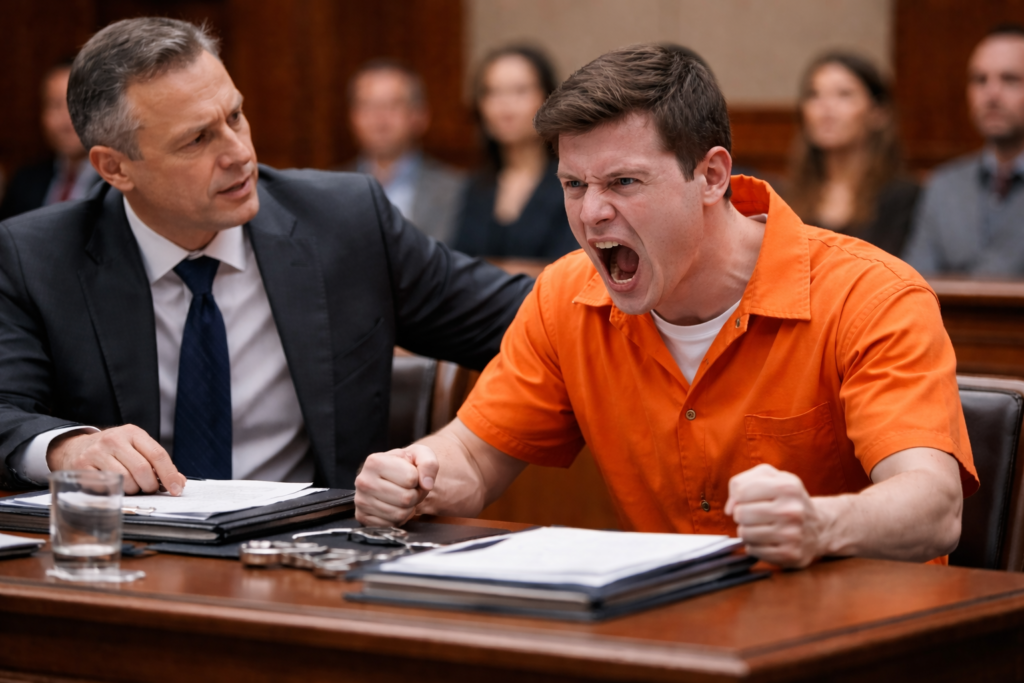
Up went her hands, fast, blocking her face. Shaking took over, deep sobs ripping through like storms after silence. Not soft drops down cheeks. Nothing held back or polite about it. The moment truth breaks walls one by one. Proof arrives loud, sharp, impossible to deny. Nowhere untouched. No space unbroken.
Strength left her body like air escaping glass. It wasn’t failure that drained her, rather honesty arriving too late. The barriers she’d stacked so high gave way without warning – lies once held close now scattered across the floor. Excuses meant to shield her dissolved like sugar in rain. What remained stood bare: real, sharp, impossible to ignore.
The Aftermath
On his feet, Judge Patterson kept speaking, voice softer yet unwavering. What came next – the steps, the schedule, how things would unfold – was laid out plainly. No triumph showed in his tone. Not a single scolding word slipped through. Forward rolled the quiet gears of judgment, steady whether she joined willingly or not.
His voice faded. The quiet came back.
Her breath came in sharp bursts while Jennifer stayed frozen, gaze fixed on the ground. A hush had settled over her frame, much like someone collapsing after miles with no strength left to take one step more. All feeling drained out during that quiet moment when silence took hold instead of words. Emptiness filled where thoughts once stirred. The air around did not shift as she offered nothing back – not motion nor sound.
Video Spreads Quickly
A few days afterward, a brief video snippet started making its way through online platforms. In the replies under those posts, people who didn’t know each other began debating hard. One group said the judge showed no compassion. A different crowd respected his strict yet balanced approach. Each person formed judgments using just half a minute of visuals plus what they already believed about right and wrong.
Yet right inside that courtroom, during the exact instant it happened, arguing made no difference.
What Actually Occurred
This had nothing to do with embarrassment or making her feel small. Not once did Judge Patterson speak loudly. There was no sign he enjoyed seeing Jennifer fall apart. In fact, what showed on his face looked more like weariness – of someone who has seen too many avoidable disasters stack up, one year passing into the next.
A weight had been building for Jennifer, slow but certain. Each poor choice added more. Hurting someone else piled on extra load. Missed chances counted just as much. That growing burden pressed harder each day. Carrying it became impossible at last. What came next arrived once pretending stopped. Reality stepped in where denial used to be.
A hush settled over the wooden benches, heavier than words. That moment carried weight beyond judgment. Stillness spoke louder than any ruling ever could
Truth lands softly, once escape ends. Running fades. Facing it begins.
The Truth Arrives
One moment everything feels normal – then it isn’t. Silence shows up instead of answers. The floor gives way beneath reasons you kept repeating. Promises you made to yourself fail to hold. Facing what was avoided becomes unavoidable.
Now the wind feels different. Each breath pulls tighter. What stood hidden behind effort now stands clear – what you kept avoiding finally seen.
Jennifer stood still, tears falling – not for pity, yet from walls closing all around. Behind her, paths vanished one by one. Each way out sealed tight. Excuses? Gone, burned through long ago. Movement now meant facing what she’d dodged for so long. Ahead lay fallout, waiting.
The Weight of What Follows
A hush filled the room when words turned into real things. Today arrived, just like that, instead of waiting for later. A figure in black held responsibility like a coat too heavy to shrug off. Meanwhile, someone dressed in orange bore the load of decisions already made.
Frost hung in the air, sharp and quiet. Not a note of music broke the stillness, nor did shadows shift on cue. What stood there instead – plain, unblinking – was choice meeting result. Moments added up without warning, leaving only truth behind.
Once in a while, just showing up makes a difference. Stillness can speak louder than motion when words run out.
It hits differently when silence follows a confession. Not the yelling, not the ruling – just stillness. A breath caught too long. Eyes dropping, not from shame exactly, but recognition. The kind that arrives late, uninvited. Words finally landing where defenses once stood. Heavy. Real. Not fixed. Never fixed.
Fog pressed against the windows when the gavel fell. This was no distant idea of fairness, instead a raw thing breathing in the room – sharp, required, refusing to be ignored.
The Lesson:
Running from what comes next might work for some time. Walls go up, made of excuses that sound good at first. Stories get told – ones that ease the weight. Yet sooner or later, if things break right, there’s a moment. A space opens. Honesty steps in without knocking. It stays until noticed.
Now here it comes, that space where things shift – could be a judge’s chamber, could just as well be a kitchen at midnight. What changes isn’t the place but the pause, the breath before speech after long silence. Then, only then, moving away loses its grip. Truth steps in, slow but certain.