
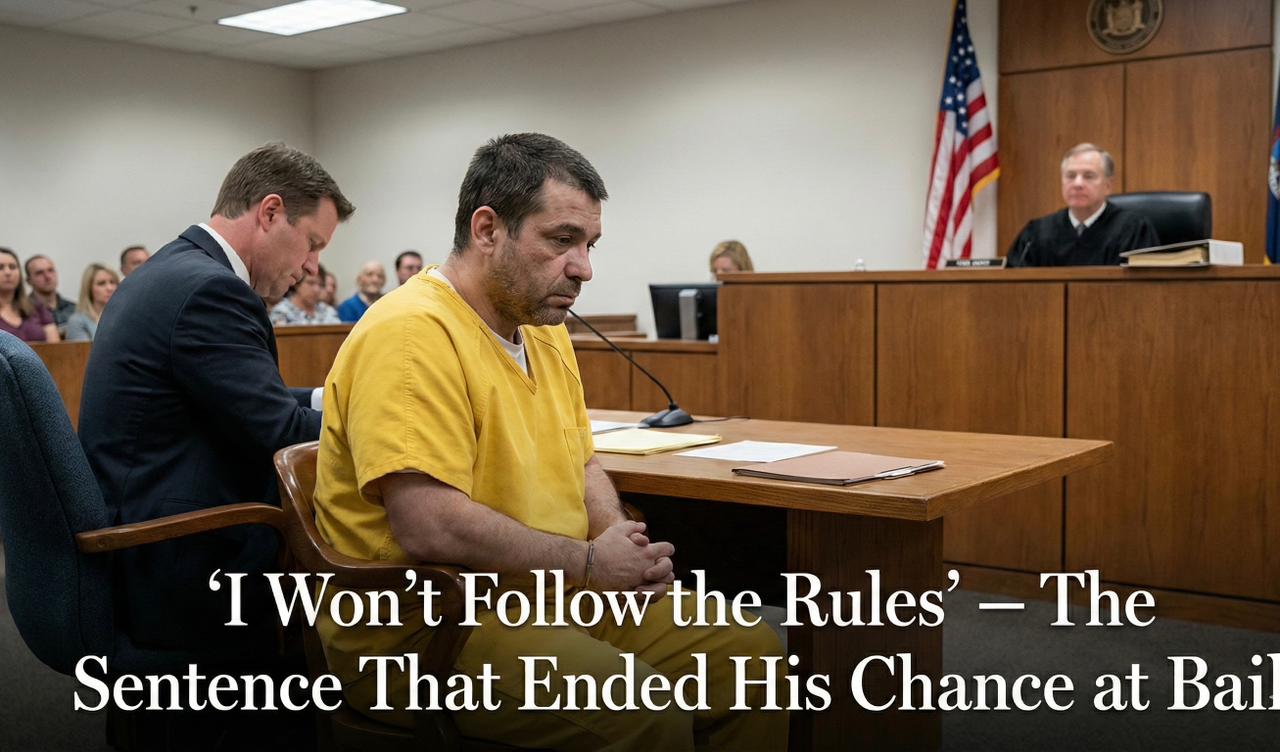

Five Words That Ended His World
One Sentence Ended His Shot at Freedom
Frozen air filled the room when Wednesday’s light crept through the windows. Silence sat heavy, pressing against every wall.
Three times now, Judge Robert Morrison had gone through the paper since morning light crept into the courtroom. His eyes moved slowly across each line again. A quiet so thick it pressed down on his neck. Not even a whisper slipped past the walls – just once, someone cleared their throat, sharp as glass breaking.
Down below, Marcus Webb fidgeted in an orange jumpsuit, weight bouncing between feet. Restless. Always moving. A mechanical tension gripped his jaw – tightening, then releasing, again and again.
Still as stone, the attorney hovered at his side, chest tight, lips sealed – maybe hoping silence would hold. Quiet stretched between them, each second heavier than the last.
The Setup
A week after Marcus last saw daylight, cuffs closed around him again. This time, it was substances found in a paper bag – nothing new, nothing extreme. Jail visits weren’t unfamiliar. Nor were these kinds of accusations. Still, worse things have happened.
Home was possible again, thanks to David Chen. With his help, Marcus walked free on fair terms. Kids waited at the door each evening after work. The construction gig stayed intact, too – so long as boundaries were respected. Simple conditions applied, nothing extreme. Showing up on time mattered. Staying clear of certain people made a difference. Checking in weekly kept things steady. Not perfect, but doable
Last thing first – basic details. Step by step, usual way. Not wild at all.
David had explained it twice already. “Just say yes, Marcus. That’s all you gotta do.”
The Moment Everything Changed
Judge Morrison looked up from the paperwork. “Mr. Webb, do you understand and agree to these bail conditions?”
Easy – that’s what it was supposed to be. Just one word needed. A single “yes.”
A pause stretched out, lasting exactly ten seconds.
Then Marcus spoke.
“I’m not following those rules.”
Heavy silence dropped into the room like a stone. A sudden hush replaced every sound.
A hush fell across the room. Stiffness crept into David’s shoulders. From somewhere behind, a breath caught in surprise.
Marcus kept going. “I’m just not doing it. That’s it.”
Judge Morrison’s Response
Stillness held him. Not a word rose in volume. Emotion stayed hidden.
Frozen in place, he stopped moving altogether.
Fingers lay still against the folder. Staring at Marcus, his gaze carried a chill far heavier than any shout.
Far from it – Judge Morrison had faced folks clueless about courtroom rules before. This moment? Just another round.
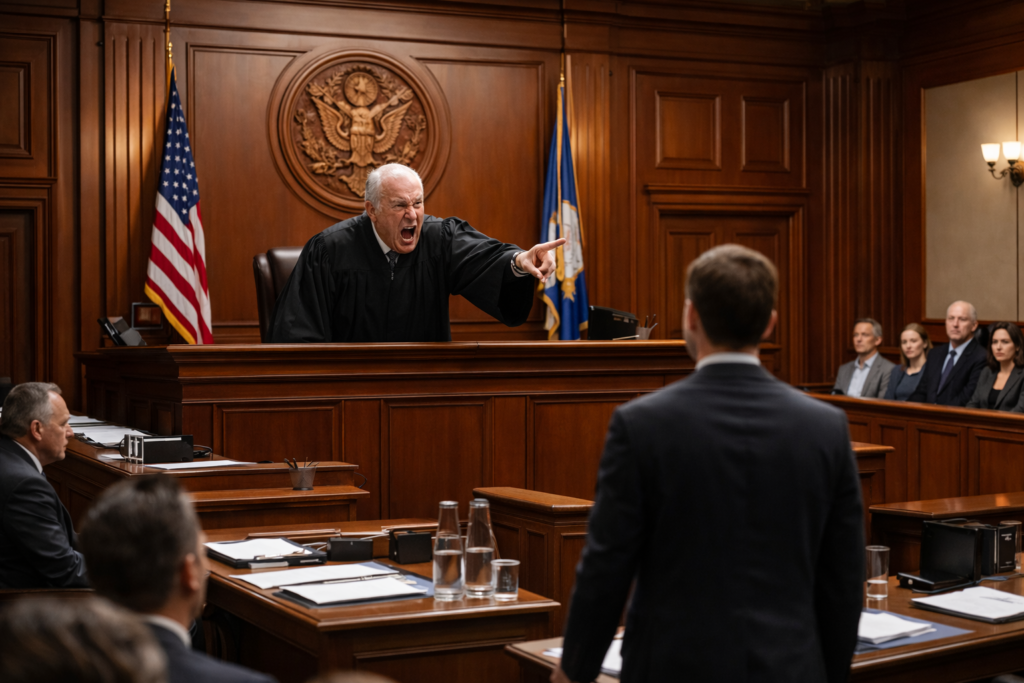
“This court does not tolerate defiance,” he said quietly.
Filling each part of the space, his voice stayed even, exact, quiet – steady through every word he spoke.
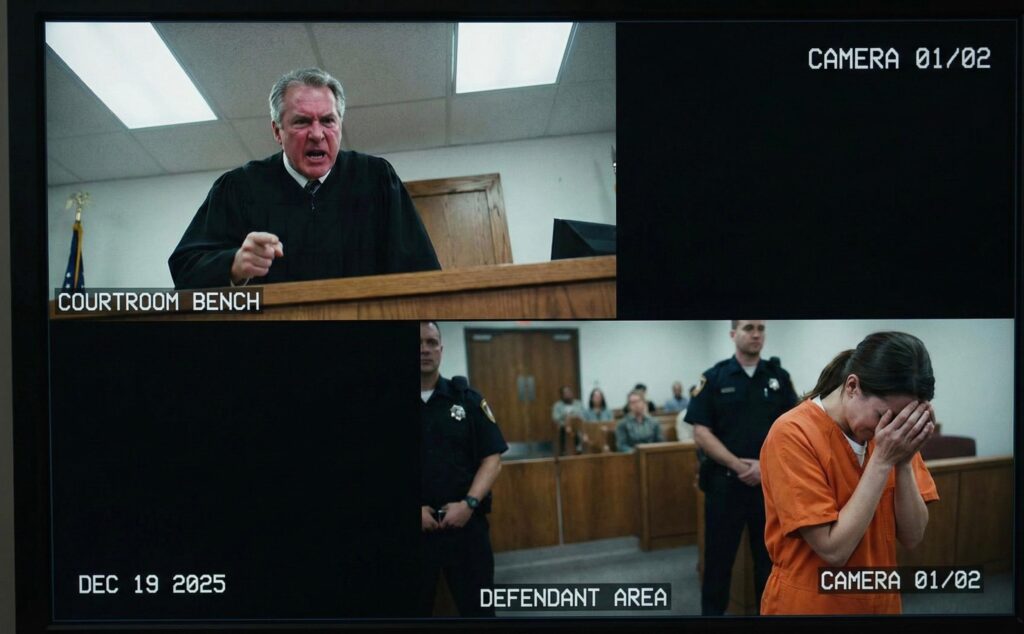
A pause hung in the air as Marcus started to speak again. His lips parted – yet no words came out. Suddenly, a shift flickered deep within his gaze. The moment took shape, quiet and unforced. Understanding crept forward, soft but certain.
Wrong move. Real bad one it turned out. Mistake sat heavy after that.
Three Words That Changed Everything
The folder shut without fuss – Morrison’s hand steady. Silence filled the room instead of words. A quiet act, done in one fluid move.
“Bail is denied.”
Last word. Still stands. No talk.
Then: “Take him back.”
That marked the end.
The Collapse
What happened to Marcus’s confidence seconds ago? Vanished.
Down went his arms, limp against his legs. The floor held his gaze, eyes refusing to lift toward any face. Power, what he once believed it was, revealed itself as quiet giving-in dressed up loud.
Falling into the seat like sand through glass. Not a spark of resistance remained. Hollow, that was it.
A flicker of tiredness crossed David’s face, his gaze landing slow – like a man who’d sat through the same trial too many times. The outcome never changed, yet there he was again.
Silence filled the room. Fear did not cause it. Words had simply run out.
Why It Happened
Most folks miss this truth about courtrooms:
What matters isn’t only proof or data. Instead, it’s your behavior that counts.
Funny how much rides on small things – like the way you speak or stand there stiff. Your attitude shows right away, not later. Some act serious, others smile too wide. One wrong move and it sticks in their mind. They notice if you roll your eyes or sigh. Even silence speaks louder than words sometimes.
Marcus might have pushed back on the terms instead. His attorney could’ve handled a request to change them.
Yet how he spoke – flat, unshaken – that showed Judge Morrison exactly what was real. His tone, sharp at the edges, gave it all away without another word.
Funny thing about him – he skips every rule. Trust just slips through his fingers.
What Bail Actually Means
Court release before trial does not belong to anyone by default. Getting it depends on whether they believe you.
The court is basically saying: “We’ll let you stay free until trial, but you have to prove you’ll show up and behave.”
Once you show you’re ignoring how things should be done, that special access just stops.
Out of nowhere, Marcus fired off a reply – roughly ten seconds had passed. Just one crisp syllable left his lips: No.
Folks noticed how still he stayed. Without a word raised, his quiet presence filled the room. Silence stretched, heavy, while everyone waited. Calm settled in, not forced, simply there. The air changed, shaped by patience instead of sound.
Silence can speak louder than a shout, now and then. Stillness carries weight where noise once tried.
The Price He Paid
Footsteps echoed closer. Marcus did not move while shadows closed in.
That orange jumpsuit meant to last a short while? Now it shows up every single day. His routine includes it without question.
He was taken past the onlookers, their eyes following slow. Not accusation, really – more a quiet weight, like remembering paths too far gone to retrace.
Five Words That Changed Everything
“I’m not following those rules.”
Standing beyond the courthouse doors, defiance could be mistaken for courage. Perhaps it looks bold to some.
Facing trial? That ends promotions fast.
This message says to the judge: trust in me is hard. Consequences? They’re unclear to me. Running away might happen, that’s what it suggests.
Footsteps echoed as Marcus stepped inside the room where decisions were made. Though freedom seemed certain, his attorney had already handled every detail behind the scenes.
Failing wasn’t part of the plan – just staying out of his own way.
Yet he gave in anyway. Something forced his mouth open. Resistance slipped away. The final remark needed air.
He lost all he had because of it.
What Happened After
Funny thing is, Judge Morrison stayed quiet on why he ruled that way. Wasn’t required of him.
Out walked Marcus, chances handed to him like open doors. Yet what came from his mouth nailed each bar shut, one phrase at a time. That cell? He shaped it himself, voice by voice, before court even called his name.
Quietly, David Chen closed his briefcase. Later would come the call to Marcus’s girlfriend – some kind of explanation needed about him not returning. Words to soften what couldn’t be fixed.
Far beneath the surface, David understood – this thing ended right at its beginning.
The Real Lesson
A quiet figure near the rear swiveled toward a classmate once Marcus had been escorted out.
“He had it,” he whispered. “Bail was right there. Why would he – “
That moment his buddy stopped talking to him. It just comes out – some folks really can’t stop their own actions
The Hard Reality of Courtrooms
Feelings have no seat in a courtroom. What matters is honoring how things are done.
Fair enough if you see it differently. An appeal stays an option. Changes might come by way of a lawyer.
When you pretend the rules are just suggestions? That is when everything stops working for youle.
Five words slipped out. That’s what landed Marcus behind bars rather than back on his porch where he should have been. He found clarity only after the door locked shut. Silence would’ve served him better. Talking cost him weeks. The air inside smelled like regret.