

The Moment Time Froze Inside Room 4B
A quiet hush settled over the room when the clock struck nine. Inside 4B, everything seemed just as it had been a hundred times before – wooden seats shaped by years of shifting bodies, bright panels flickering above, one lone flag drooping near the back wall.
On one side of the room, David Chen waited by the wooden defense table wearing an orange county jail uniform. He kept his hands folded tight, gaze jumping from square on the floor to where Judge Reynolds sat above everyone. Next to him, Sarah Martinez – his court-appointed lawyer – held a worn manila folder, its pages bent from repeated flipping through. Behind the two of them, standing like statues near the wall, were the bailiffs, expressions blank, showing nothing. The air stayed still, heavy with silence.
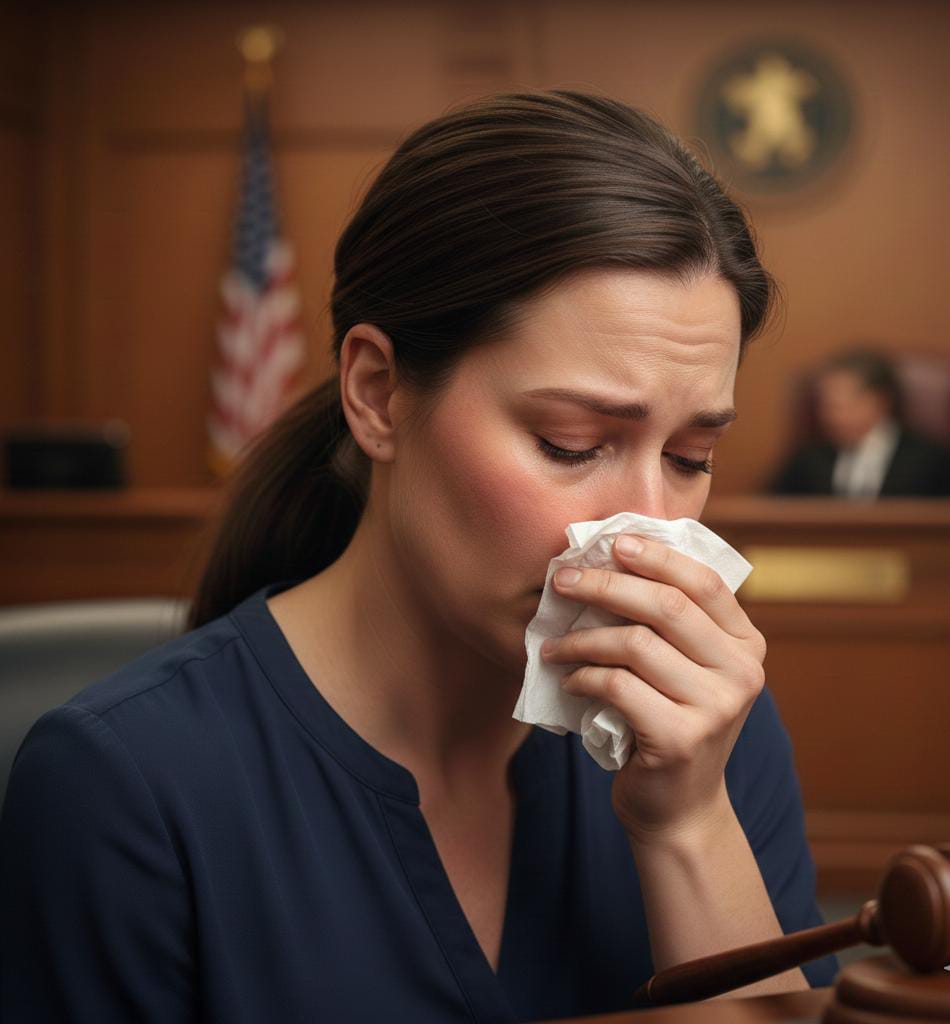
A small crowd filled the room, perhaps twelve faces under the lights. Third row from the front – David’s mother, silent, palms resting one on top of the other. In the dim corner behind, two studying law bent over notebooks, pens moving between whispers. The journalist near the door flicked screen after screen without lifting her eyes. Silence came slowly. Routine shaped each breath.
Fresh through the door came Judge Reynolds.
The Routine That Wasnt
Into the chair he settled, slow like always, just as he had done since first sitting here two decades gone. His fingers nudged the frames of his glasses into place. Eyes dropped toward the stack waiting before him. For a stretch of moments, nothing broke the silence except the pen dragging across sheets.
Out of nowhere, he began talking – his voice edged with a quiet weariness built from too many identical cases piling up night after night.
“Mr. Chen,” he began, not looking up. “I’ve been reviewing the jail reports submitted by the county.”
A small shift came through David’s stance. Her hands clamped down a fraction harder on the folder, though most would miss it.
Flicking past routine pages, Judge Reynolds moved slowly through paperwork meant to blend into background noise. This round though, details caught his attention. Meals pushed aside, untouched. Shouts exchanged behind bars, not whispered. Marks appearing on concrete surfaces, not just dust. Quiet routines broken when voices rose at check moments.
Few signs point to harm. Little suggests surprise. Instead, traces build – small marks left by a person unwilling or unable to obey simple orders, not even behind bars.
The courtroom fell quiet when the judge lifted his eyes.
It was then that David slipped up for the first time.
The Unraveling
“I didn’t start those fights,” David blurted out, the words tumbling over themselves in his rush to explain. “The food in there is garbage. They expect you to eat that? And I wasn’t being disruptive, I was just – “
A flicker of movement – Sarah’s fingers brushed his sleeve, a quiet wish for silence hanging in the air. Yet David was past pausing. Sentences tumbled forward, quicker than before, sharpened by something tense in his throat.
“I wasn’t doing anything wrong. Those reports are exaggerated. The guards have it out for me because – “
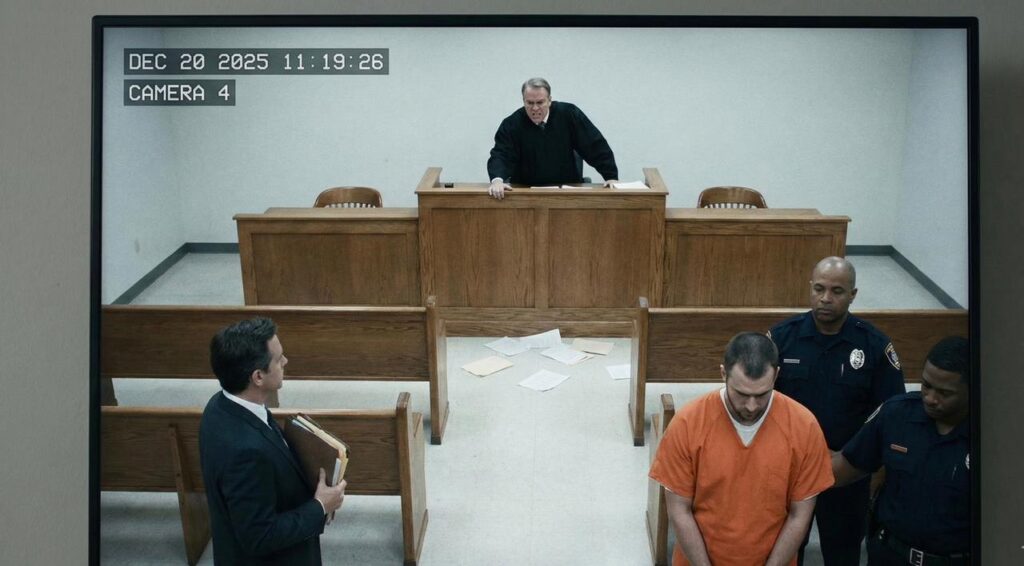
The pen paused mid-sentence. Her hand rested on the desk. The courtroom waited without sound.
A tiny move – setting the pen on the table – shifted the whole moment. Cold crept through the air, sharp and sudden. David paused, words fading as if pulled away by silence. Stillness took over where sound had been.
Afterward came a quiet too long to be ordinary. Not uncomfortable, yet thick with what went unsaid. A person in the back moved slightly – the noise cut sharp through stillness. David’s mother lowered her eyelids slowly. One student let their pen rest, gaze fixed ahead instead.
Only then did the judge lift his eyes, face changed. Not furious like on stage – no flushed skin, no tight teeth. Instead, a still mouth, set deep, showing waiting was done and boundaries passed.
The Line In The Sand
“Mr. Chen,” Judge Reynolds said quietly, each word measured and deliberate. “This court operates on a foundation of respect and accountability. Those aren’t suggestions. They’re requirements.”
A silence opened up, giving space for it to settle.
“If you can’t demonstrate basic respect for rules and authority while detained – when you’re literally surrounded by consequences – I have no confidence you’ll respect the conditions of bail.”
Quiet stayed in his words. Not once did he tremble. Oddly enough, silence weighed heavier than a scream ever might. Stillness held more edge.
That moment, he moved in a way nobody expected.
Back he slid the chair, one slow scrape at a time.
A hollow scrape of chair legs on floor tiles rang out, breaking the quiet. Up rose Judge Reynolds, tugging his robe into place just so, like before. Not a syllable left his lips. He did not look back at David. Off he went, heading for the private room behind the court.
Fog lifted after the courtroom emptied. Silence settled where voices had clashed just minutes before.
Finito. Done without ceremony. No follow-up. Simply finished.
The Aftermath
Stillness held everyone for a few breaths. Staring at the bare bench, David stayed locked in place, as if waiting for it to speak. Gone was the boldness that drove him moments before. Down went his shoulders, heavy now. His mouth opened, closed, searching for sense where none appeared.
The folder shut with a quiet snap. Her eyes stayed down, fixed on the desk. Not a word slipped out – no comfort, no reason given. What happened stood solid, unmovable by speech. Silence filled the space where answers might have been.
David’s mother hid her face in the gallery, fingers pressed tight against her skin. Across the room, eyes met between law students – wide, stunned – realizing this moment held lessons no book could carry. A reporter sat frozen mid-scroll, then began hammering keys, words pouring into a notebook without pause.
A guard moved ahead. “We have to speak with you,” he said, facing Mr. Chen
David spoke softly now, any resistance melted away. His hands extended toward the cuffs before a word was needed, understanding at last what had come to pass.
What Really Happened
A truth overlooked when things unravel? Judges step away not to punish. Their exit guards something quieter – respect, order, the frame that holds it all together.
Twenty minutes of scolding sat ready on Judge Reynolds’ tongue. He might have called it contempt. New penalties hovered within reach, restrictions too. What he did was quieter than any of that – stepped back.
Walking out spoke louder than any phrase ever could. Should this way be ignored, then nothing stands at all.
Showing up matters more than people say. When someone appears, sticks to simple expectations, acts like they get what is at stake, things shift slightly. Instead of automatic moves, room opens for thought. Judges look closer, listen differently, take note of context even if just a little. Behavior changes how facts land. A small effort can alter the weight of everything that follows.
It was never the arrests that broke things. Those could have been handled, made sense of somehow. What unraveled everything was how David refused to own up, wouldn’t see any reflection of himself in the mess he kept making.
The Bigger Picture
That afternoon, Sarah saw David inside the jail’s meeting space for lawyers. In some way, he seemed less there – narrowed by everything that went down.
That was my fault,” he whispered, eyes down.
Right,” said Sarah, gentle but firm. “That was you.”
“Can we fix it?”
She paused, choosing her words carefully. “Maybe. Eventually. But Judge Reynolds sent a very clear message today. The question is whether you actually heard it.”
After some quiet, David broke the stillness. What comes next?
“Now you wait. You follow every single rule in here. You show that you can control yourself when it matters. And maybe – maybe – we can request another hearing in a few weeks and you can demonstrate you’ve learned something.”
“And if I can’t?”
Sarah met his eyes. “Then you stay here until trial. That’s what happens when you convince a judge you can’t be trusted outside a cell.”
The Empty Bench
Floor hums under the push of a broom instead of silence now. That old wooden seat stays where it got shoved, frozen mid-step like everything else waits too. Dust dances behind the machine’s growl through leftover quiet.
A silence louder than words filled the room. What was missing spoke clearer than proof ever could.
What stood out was limits, what follows when they’re crossed. Quiet power often carries more weight than loud demands. One thing matters: giving reasons versus dodging blame.
Truth lives in courtrooms more than feelings do. What keeps things moving isn’t passion, it’s a shared nod toward order. Each person there carries weight, not because of status, but because they’re part of a frame bigger than themselves.
If you cross that line – if it seems like disregard or confusion – the system will not adjust. Movement ends.
A chair creaks under weight when someone shifts too fast. That courtroom hush came not from fury but from silence piling up between words. The gavel fell because motion feeds momentum – and letting it roll rewards what shouldn’t stick. Air thickens when roles blur. One person standing stops pretending just by staying still.
The chair stayed crooked when the janitor shut down the machine, guiding his cart forward. Courtroom air held still, shaped by something said through silence.
Silence often follows when fairness leaves. Other times, it slips out unnoticed.
That silent exit made one thing clear to those watching. Respect inside a courtroom does not depend on mood. When someone walks away without a word, the weight of silence speaks louder than rulings. It shows how dignity stays fixed, never shifting with temper or pride. What matters is shown not in speech but absence. The space left behind holds more truth than any oath.
That fee was required to enter. Yet David Chen discovered moments ago his funds fell short.