

Courtrooms don’t usually feel confusing. Most days, things are clear. Someone is right, someone is wrong, or at least that’s how it looks on the surface. But that day, confusion sat in the room like a heavy fog. Nobody really understood what was coming, not even the people closest to the case.
The hearing started quietly.
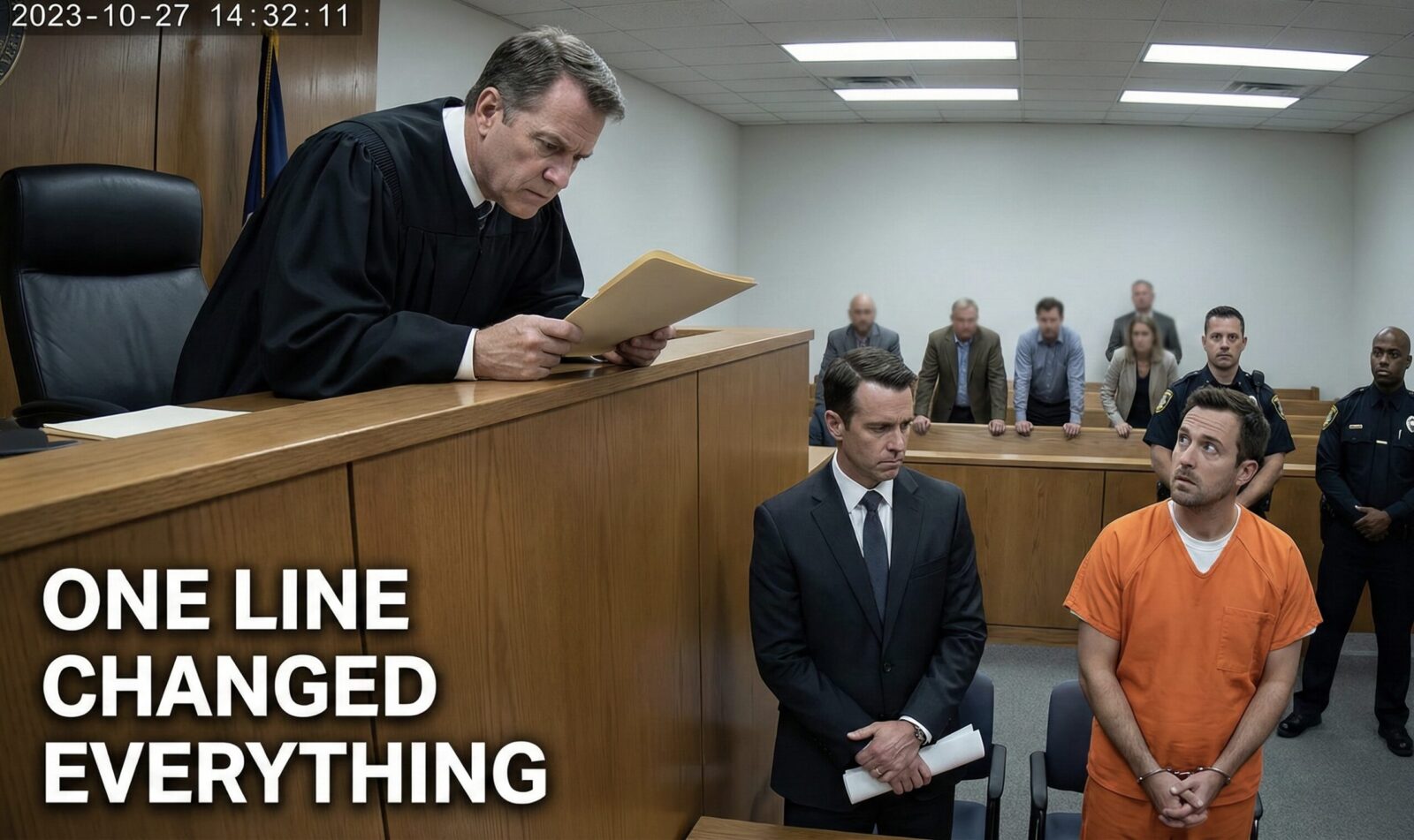
The judge sat at the bench, flipping through a thin file. Not thick, not dramatic. Just a few papers clipped together. He looked calm, almost bored. The police officers stood where they always stand. The public seating was half full, people waiting without much interest. Another case, another story, that’s what it felt like.
On the right side stood the man.
He didn’t look dangerous. He didn’t look confident either. Average height, average build. His orange jail jumpsuit was clean but wrinkled. He stood still, hands in front of him, eyes forward. No anger on his face. No fear either. Just blank, like he was somewhere else in his head.
The lawyer beside him kept checking the papers again and again. His fingers tapped lightly on the folder. He looked nervous. Not the loud type of nervous, but the quiet one. The kind where you’re worried about something you can’t fully control.
The judge finally spoke.
His voice was neutral. No emotion. He asked a simple question about the timeline. Dates. Times. Basic details. The lawyer answered calmly. The criminal stayed silent. Everything felt normal, almost boring.
Then the judge paused.
He looked down at the file again. Turned one page. His eyebrows pulled together slightly. Not shock. Just focus. He leaned forward a little and read something carefully. The room stayed silent.
People didn’t notice at first, but the judge stopped flipping pages.
He cleared his throat.
And then he read one line out loud.
It wasn’t dramatic. It wasn’t loud. Just a single sentence, spoken clearly. A detail about a phone call. The time didn’t match the story that had been repeated again and again.
The lawyer froze.
You could see it immediately. His tapping fingers stopped. His shoulders stiffened. He didn’t interrupt. He didn’t speak. He just stood there, staring at the file like it had betrayed him.
The public started paying attention now.
The judge looked up, straight at the lawyer, and asked him to explain the difference. His tone was still calm, but firmer now. The kind of calm that doesn’t let you escape.
The lawyer tried.
He explained it away at first. Said it was a mistake. A small error. He spoke carefully, choosing words like “confusion” and “misprint.” His voice was steady, but his eyes gave him away.
The judge didn’t argue.
He just nodded slowly and turned to the next page.
Then he read another line.
This one about location data.
The room shifted.
The criminal looked up for the first time. Just slightly. Like he had heard something familiar. His face didn’t change much, but his breathing slowed. He stayed silent, like he was afraid to react too soon.
The lawyer’s explanation started to fall apart.
He spoke again, but this time slower. Less confident. His sentences didn’t flow as smoothly. He avoided eye contact now, looking down instead of at the judge.
The judge placed the file flat on the bench.
He didn’t raise his voice. He didn’t accuse anyone directly. He simply explained what the documents were saying. How the timeline didn’t match. How the call records placed the accused somewhere else entirely.
The courtroom felt strange.
No shouting.
No gasps.
Just realization slowly spreading.
The public leaned forward. Some exchanged looks. Someone whispered, then stopped when they realized how quiet it was.
The police officers stayed alert, but even they looked uncertain now. Not about their job, but about the story they thought they knew.
The judge turned toward the criminal.
He asked him one simple question.
The man answered quietly. His voice was low, almost unsure. He didn’t argue. He didn’t defend himself loudly. He just answered what was asked. Nothing more.
The judge nodded again.
Then he said something nobody expected.
He said the court would pause proceedings. That the evidence needed review. That there were serious inconsistencies that could not be ignored.
The lawyer closed his file slowly.
No argument. No protest. He knew it was over for now.
The criminal exhaled deeply. It wasn’t relief exactly. More like release. Like holding your breath for too long and finally being allowed to breathe again.
The public reacted softly. No celebration. No applause. Just quiet movement. People standing, adjusting jackets, whispering to each other as they processed what they had just seen.
The judge stood up.
Not angrily. Not emotionally. Just professionally. He announced the adjournment and walked out.
The courtroom stayed silent for a moment after he left.
Everyone had come expecting a simple case. A clear story. But they left realizing how fragile stories can be when one small detail is wrong.
That day wasn’t about drama.
It was about patience.
About reading carefully.
About not rushing to judgment.
And it reminded everyone in that room that sometimes, justice doesn’t arrive loudly.
Sometimes it comes quietly, one line at a time.