

Courtrooms are usually remembered for tension. Loud voices. Arguments that don’t seem to end. Moments where authority feels heavy and cold. That’s what most people expect when they sit on a hard wooden bench and wait for a judge to speak. Most of the time, that expectation is right. But once in a while, something happens that doesn’t follow that pattern at all.
That day started like any other.
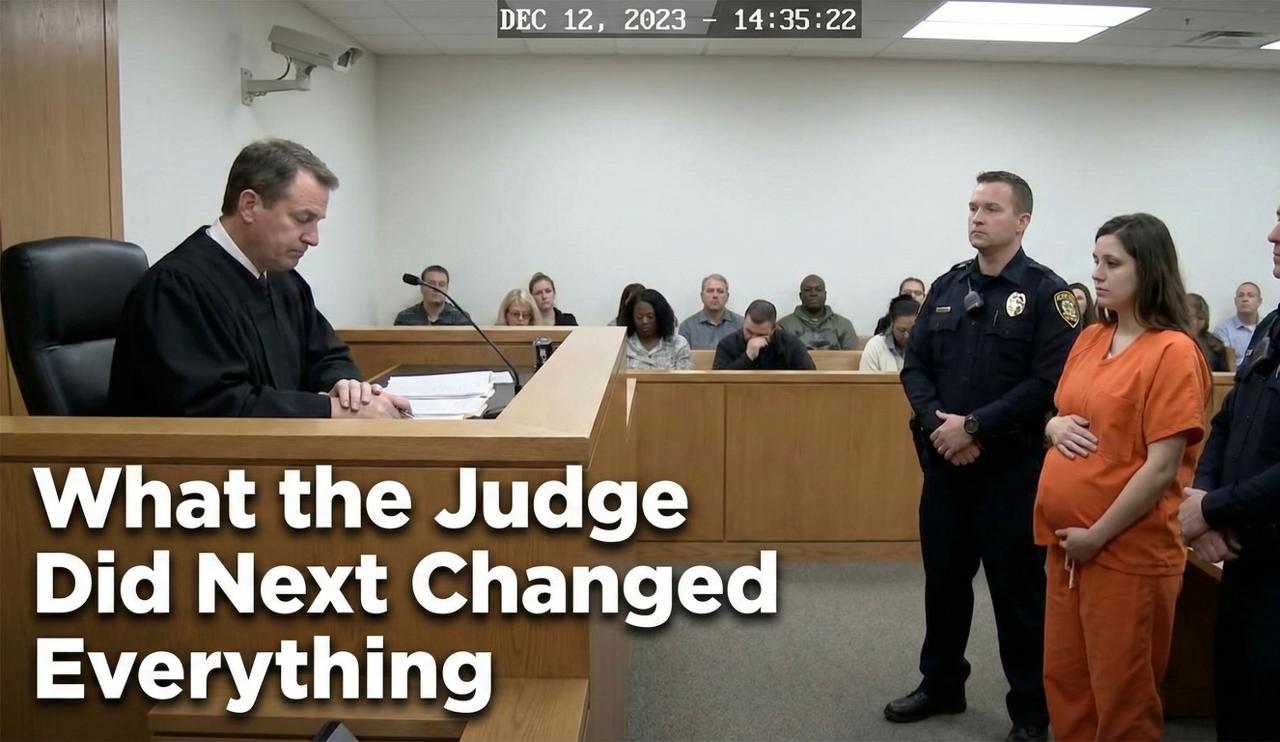
The courtroom was bright with fluorescent lights, the kind that show everything clearly whether you want them to or not. There was nothing dramatic about the space. No shadows. No feeling of performance. Police officers stood where they always stand. The public gallery was quiet, people sitting with folded hands, crossed arms, or just staring ahead. The judge sat at the bench, watching and listening, not saying anything at first.
On the right side of the room stood the woman.
She was wearing an orange jail-issued jumpsuit, a little loose around her shoulders. One hand rested lightly on her stomach, almost without thinking about it. She looked tired. Not just tired in her body, but tired in a deeper way. Her posture was careful, like she was constantly reminding herself to keep balance. She didn’t speak. She didn’t look around. She just stood there, waiting.
The judge noticed.
Not all at once, but slowly. His expression shifted as he looked at her more closely. It wasn’t surprise. It wasn’t anger either. It was recognition. The kind that happens when someone understands that this situation isn’t just about rules and procedure anymore.
When he finally spoke, his voice was calm.
There was no shouting. No sharp tone. He addressed the situation firmly but with care, making it clear that her condition mattered. He spoke about responsibility, not in a way meant to punish, but to protect. His words focused on health, safety, and urgency. He instructed the officers to take her to the hospital immediately and to make sure she received proper medical care.
After that, the room felt different.
The woman lifted her head slightly. Her shoulders relaxed just a bit. She had been holding herself together tightly, and now something inside her loosened. Relief showed on her face before she could stop it. Her eyes filled with emotion. This time it wasn’t panic. It was something closer to gratitude.
She spoke only once.
Her voice was soft, almost fragile. Just two words. “Thank you.” Nothing else. No explanation. No defense. Just gratitude.
The police officers responded quietly. Their body language changed. Slower. More careful. One of them moved closer and guided her gently, making sure she walked steadily. There was no rushing her, no pulling, no harsh commands.
The judge continued briefly, repeating the importance of care and safety. His tone stayed respectful. When he finished, he didn’t drag it out. He simply nodded. It was a small gesture, but it carried reassurance. For a moment, he even allowed a gentle smile. Not approval. Not judgment. Just humanity.
Then he went silent.
In the public seating, something subtle happened. A few people nodded quietly. Others lowered their eyes. No one spoke. No one whispered. It felt like everyone understood this wasn’t a moment for commentary or opinions.
The woman was guided forward carefully. She kept one hand near her stomach, breathing more evenly now. Fear was still there on her face, but it was different. Less sharp. Less desperate. The kind of fear that exists alongside hope instead of replacing it.
The courtroom, a place people usually connect with punishment, had chosen protection instead.
Later, people would describe that moment in different ways. Some would say the judge was kind. Others would say he was simply doing his duty. But those who were actually there felt something deeper. They felt the weight lift from the room. Not completely, but enough to notice.
It wasn’t dramatic.
No one raised their voice.
No one cried loudly.
No one argued.
That’s what made it powerful.
In a system built on rules and consequences, compassion had been applied without breaking order. Authority wasn’t weakened by empathy. If anything, it felt stronger because of it.
The woman didn’t suddenly become free. Her case didn’t disappear. Reality didn’t change overnight. But in that moment, the court recognized something important — that justice isn’t only about judgment. Sometimes it’s about care, when care is needed.
As the officers escorted her out, the bench remained still. The public stayed seated. The judge watched until she was gone.
The room returned to quiet.
But it wasn’t the same quiet as before. It felt lighter. Less tense. The kind of quiet that stays with people even after they leave.
Courtrooms are remembered for sentences and verdicts. But sometimes, they’re remembered for moments like this — when the law pauses just long enough to protect life.
And for everyone who witnessed it, that quiet decision said more than any gavel ever could.