

The courtroom had seen hundreds of cases like this before, yet something about that day felt different.
The lights were bright, the air sterile, and everything looked exactly as it should inside a modern courthouse. Still, unease lingered. The kind that settles in quietly, warning everyone that what’s about to happen will not be ordinary.
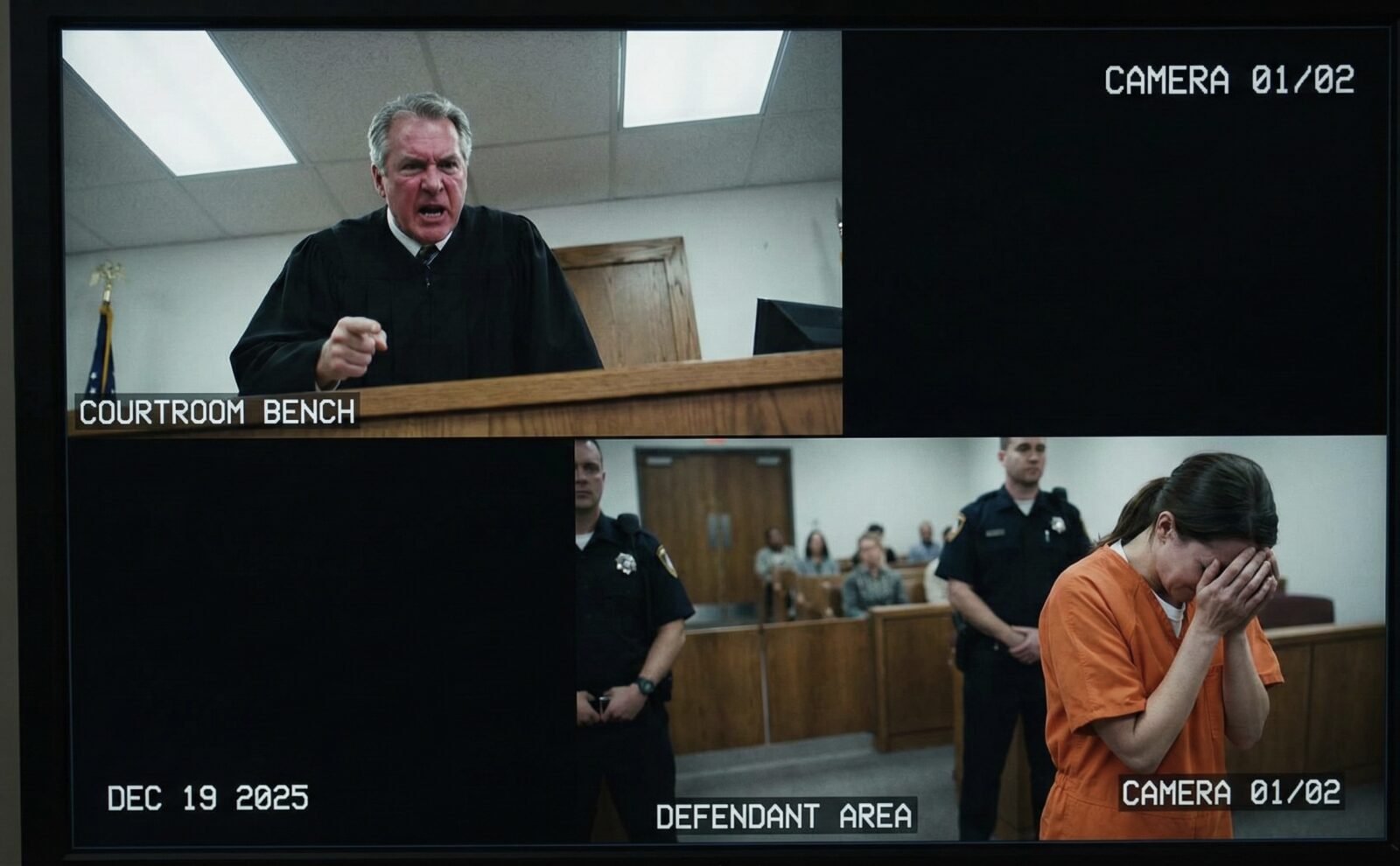
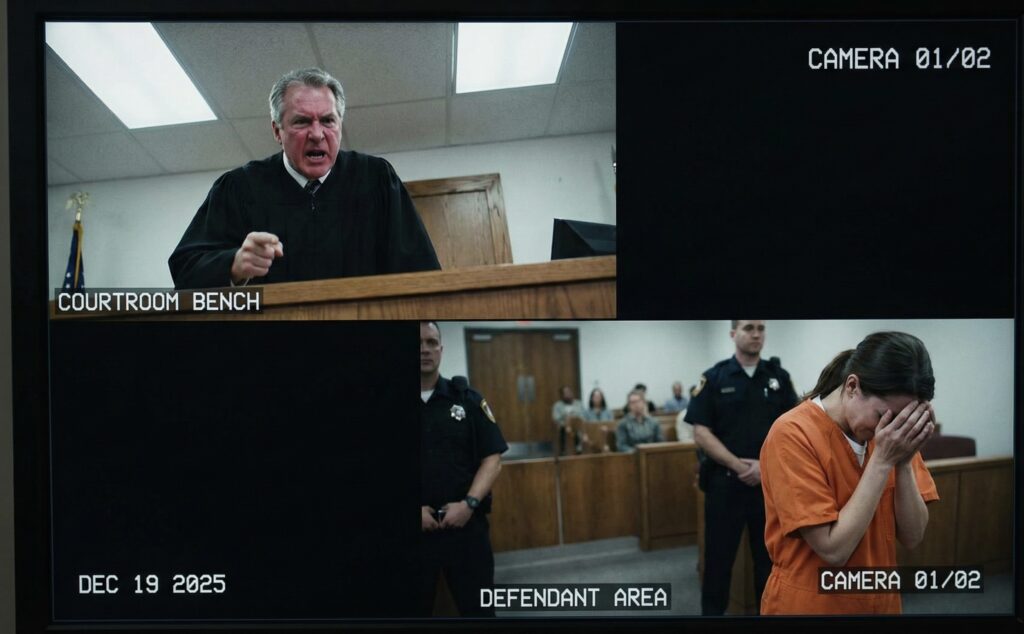
The judge sat behind the bench, calm on the surface but alert. Years of experience had taught him how to read a room, and today the room was heavy with consequences. In front of him stood a young woman in an orange jumpsuit. She was pregnant. One hand rested protectively on her stomach, as if reminding herself that she was no longer alone in her decisions.
She kept her eyes down.
The judge began speaking, not harshly, but with seriousness that carried weight. He talked about responsibility—how life changes the moment another life depends on you. His voice was steady, firm, meant to be understood rather than feared.
But understanding did not come easily.
The woman’s shoulders tightened. Tears gathered silently, blurring her vision. She wanted to disappear, to shrink away from the moment that now defined her. She did not interrupt. She did not defend herself. Her silence was louder than any argument she could have made.
As the judge continued, his patience thinned. Not from anger alone, but from disbelief. He spoke of choices made in despair, of consequences that don’t vanish simply because regret arrives late. His voice grew stronger, sharper, filled with concern and frustration in equal measure.
The woman began to tremble.
Her breathing became uneven. Tears rolled freely now, and she pressed her hand more firmly against her stomach, grounding herself in the one thing that still mattered. Soft cries escaped her, broken and helpless. She was no longer holding herself together.
Then the judge rose from his chair.
The movement changed everything.
His voice filled the courtroom, loud and commanding, cutting through the tension like a blade. This was not cruelty—it was authority born of responsibility. He spoke with shock and anger, not only at the act itself, but at the risk it posed to an innocent life.
The woman collapsed inward.
She covered her face, sobbing openly now, her body shaking under the weight of fear and regret. There were no words left for her. Only emotion. Only the reality of what had nearly been lost.
No one else moved.
The officers stood firm.
The lawyer remained silent.
The public watched, frozen.
The judge did not sit back down when he finished. He stayed standing, breathing heavy, eyes fixed forward. His final words carried warning and responsibility, reminding everyone present that the law exists not just to punish, but to protect.
When his voice finally stopped, the courtroom returned to silence.
The woman’s crying softened into quiet sobs. Her head dropped, her strength spent. She stood there, broken, afraid, and painfully aware that nothing would ever be the same.
Later, people would talk about that day. Some would debate the judge’s tone. Others would pity the woman. But those who were present understood the truth.
This wasn’t about anger.
It wasn’t about punishment.
It was about a moment when reality refused to be ignored—and silence said everything words could not.